
College Basketball Eligibility Rulings Put Student-Athletes in a High-Stakes Legal Gray Zone
Supreme Court ruling removes a higher legal barrier for students with disabilities pursuing discrimination claims
Press Release Disclaimer: This is a press release distributed through the XPR Media network. It has not been independently verified by our newsroom.
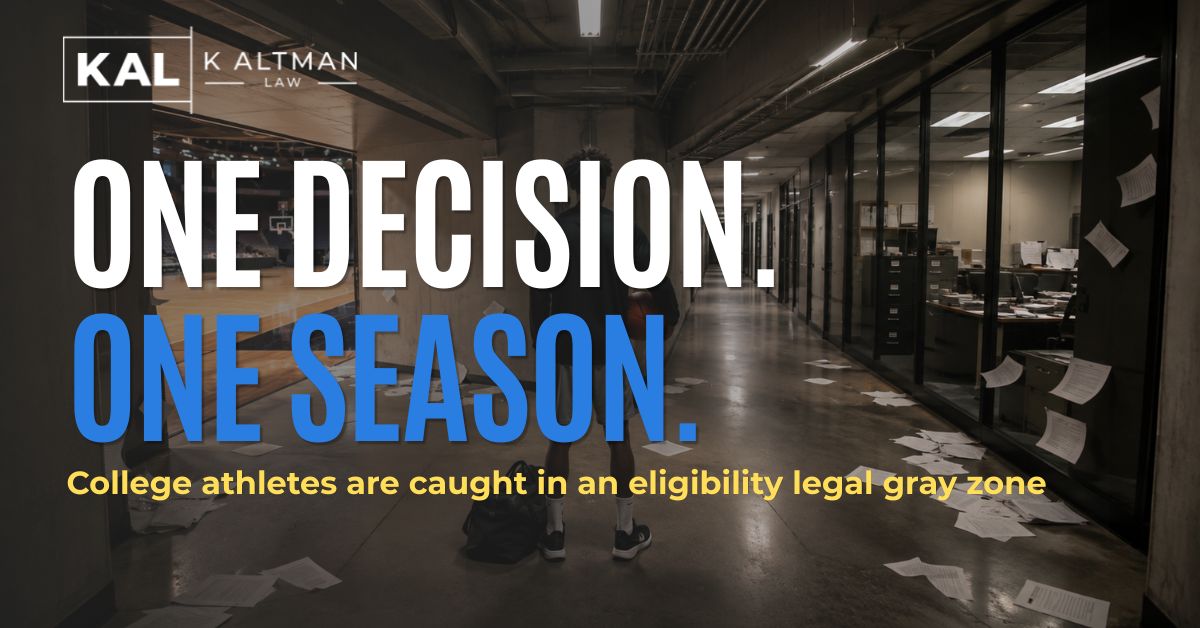

Supreme Court ruling removes a higher legal barrier for students with disabilities pursuing discrimination claims against schools.
WASHINGTON, DC, UNITED STATES, August 25, 2026 /EINPresswire.com/ — With the 2026-27 college basketball season approaching, a wave of litigation over NCAA eligibility rules is leaving student-athletes, coaches and universities confronting an unusually uncertain landscape over who may compete and for how long.
A recent ESPN analysis of the college basketball eligibility litigation describes a patchwork of rulings involving athletes seeking additional seasons of competition, including litigation over the NCAA’s transition to a new age-based eligibility model. Courts in different jurisdictions have reached differing interim results, while appeals remain pending and roster decisions are being made in real time.
The uncertainty follows the NCAA Division I Cabinet’s adoption of a new age-based model that generally provides eligible athletes a five-year period of eligibility tied to age and college enrollment. The new framework is designed to replace much of the former seasons-of-competition, redshirt and waiver structure for athletes entering under the new rules. But athletes whose careers straddle the old and new systems have increasingly turned to courts, arguing that they are being treated differently from athletes who will receive five years under the new framework.
“Eligibility is no longer just a compliance-office question. For some student-athletes, it can become a time-sensitive legal issue with immediate consequences for a scholarship, a transfer opportunity, NIL value and potentially a professional career,” said Candice Lapham, Senior Attorney, K Altman Law. “When the governing rules are changing while courts are simultaneously interpreting or restraining those rules, athletes and families need to understand their options before a roster deadline or season makes the issue effectively irreversible.”
Recent cases illustrate the stakes. Courts have granted temporary relief to groups of athletes seeking a fifth season, while other rulings have favored the NCAA or been stayed on appeal. Those procedural differences matter: an injunction may temporarily permit one athlete to compete without establishing a nationwide rule applicable to every similarly situated athlete.
For student-athletes, K Altman Law says the practical issue is therefore highly individualized. An athlete’s enrollment history, prior seasons, redshirt status, junior-college participation, professional activity, transfer history and the timing of the NCAA determination can all affect the analysis. The applicable court jurisdiction and procedural posture of pending litigation may matter as well.
“Athletes should not assume that a teammate’s ruling, a social-media post or even another school’s interpretation automatically determines their own eligibility,” Lapham said. “The factual record and timing can be decisive. If an athlete believes an eligibility determination could cost a season of competition, the record should be evaluated immediately rather than after the season begins.”
The broader dispute also reflects the continuing transformation of college athletics. Eligibility rules now intersect with transfer mobility, NIL compensation, revenue sharing, professional opportunities and antitrust litigation. As those systems evolve, disputes once handled almost exclusively through internal NCAA processes are increasingly reaching state and federal courts.
For athletes and families, the immediate takeaway is to preserve eligibility determinations, communications with compliance personnel, enrollment and competition histories, scholarship documents, transfer records and any NCAA waiver or appeal materials. Those records may become critical if an eligibility dispute requires expedited administrative or judicial review.
Student-athletes and families facing NCAA eligibility, NIL, transfer, disciplinary or other college-athletics disputes can learn more about K Altman Law’s student-focused representation at www.kaltmanlaw.com.
About K Altman Law
K Altman Law is a national student-focused law firm representing students and families in matters involving student defense, special education, Title IX, civil rights, NIL and related education and college-athletics disputes. The firm advocates for students navigating high-stakes institutional and regulatory processes.
Candice K. Lapham
K Altman Law
+1 888-984-1341
kalonline@kaltmanlaw.com
Visit us on social media:
LinkedIn
Instagram
Facebook
YouTube
TikTok
X
Legal Disclaimer:
EIN Presswire provides this news content “as is” without warranty of any kind. We do not accept any responsibility or liability
for the accuracy, content, images, videos, licenses, completeness, legality, or reliability of the information contained in this
article. If you have any complaints or copyright issues related to this article, kindly contact the author above.

Media gallery


