
Brazil Pharmaceutical Industry Market to reach USD 42.21 Billion by 2035 at 2.09% CAGR
Brazil Pharmaceutical Industry Market to Surge from USD 34.4 Bn in 2025 to USD 42.21 Bn by 2035—By Rising Chronic
Press Release Disclaimer: This is a press release distributed through the XPR Media network. It has not been independently verified by our newsroom.
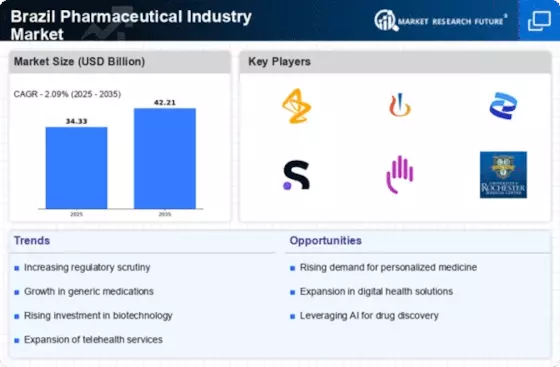

Brazil Pharmaceutical Industry Market to Surge from USD 34.4 Bn in 2025 to USD 42.21 Bn by 2035—By Rising Chronic Disease Prevalence, Generic Drug Expansion
NY, CA, UNITED STATES, August 25, 2026 /EINPresswire.com/ — As per Market Research Future, the Brazil Pharmaceutical Industry Market size is projected to reach USD 42.21 Billion by 2035 from USD 34.4 Billion in 2025, at a CAGR of 2.09% during the forecast period 2025–2035. The market base was estimated at USD 33.63 Billion in 2024.
The 2.09% CAGR—anchored by structural shifts in healthcare access and demographic trends—is propelled by three converging forces: the rising prevalence of chronic diseases, with noncommunicable diseases accounting for approximately 74% of all deaths in Brazil, driving sustained demand for cardiovascular, diabetes, oncology, and other long-term therapies; the expansion of healthcare access and government support for pharmaceutical accessibility, including policies promoting generic drugs which now account for approximately 40% of the total pharmaceutical market; and the aging population, with over 30% of the Brazilian population projected to be aged 60 and above by 2025, increasing the burden of age-related chronic conditions.
Government and multilateral health organizations are amplifying this momentum. According to the World Health Organization (WHO), noncommunicable diseases account for approximately 74% of all deaths in Brazil. The Pan American Health Organization (PAHO) reports that NCDs account for nearly 75% of deaths, significantly increasing demand for cardiovascular and oncology pharmaceutical treatments. Brazil’s healthcare expenditure represents approximately 9% of national GDP, reflecting substantial investment in healthcare infrastructure. The government is actively promoting local production through tax incentives and funding, with local production now accounting for approximately 60% of the pharmaceutical market.
Request A Free Sample:
https://www.marketresearchfuture.com/sample_request/17748
Key Market Trends & Growth Drivers
Rising Prevalence of Chronic Diseases
The rising prevalence of chronic diseases is a major growth driver for the Brazil Pharmaceutical Industry Market. According to WHO, noncommunicable diseases account for approximately 74% of all deaths in Brazil, highlighting the substantial and growing demand for cardiovascular, diabetes, oncology, and other chronic disease medications. PAHO data indicates NCDs account for nearly 75% of deaths, significantly increasing demand for cardiovascular and oncology pharmaceutical treatments.
Expansion of Generic Drugs
The Brazil Pharmaceutical Industry Market is witnessing a robust expansion of generic drugs, which are becoming increasingly popular due to their affordability and accessibility. The Brazilian government has implemented policies to promote the use of generics, resulting in a significant increase in their market share. As of 2025, generic drugs account for approximately 40% of the total pharmaceutical market in Brazil. According to PubMed, generic medicines can reduce treatment costs by 30% to 80% compared with branded alternatives, improving medication accessibility.
Aging Population
Brazil’s demographic shift towards an aging population is significantly influencing the market. By 2025, it is estimated that over 30% of the Brazilian population will be aged 60 and above. This demographic change is associated with a higher prevalence of chronic diseases, such as diabetes and cardiovascular conditions, which require ongoing medication and treatment. According to IHME, life expectancy in Brazil has increased significantly over recent decades, contributing to a growing elderly population and increasing prevalence of chronic conditions.
Government Initiatives for Local Production
The Brazilian government is actively promoting local production of pharmaceuticals to reduce dependency on imports and enhance self-sufficiency. Initiatives such as tax incentives and funding for local manufacturers are being implemented to stimulate domestic production. As of 2025, local production accounts for approximately 60% of the pharmaceutical market in Brazil, reflecting a significant shift towards homegrown solutions.
Regulatory Reforms
Recent regulatory reforms in Brazil are streamlining the approval processes for new drugs and therapies. This initiative aims to enhance the efficiency of the pharmaceutical sector, potentially reducing the time it takes for innovative products to reach the market. Brazil is modernizing biologics and regulatory pathways through ANVISA, while recent policy moves are opening domestic R&D and research opportunities.
Ask for Customization:
https://www.marketresearchfuture.com/ask_for_customize/17748
Market Segment Insights
BY THERAPEUTIC AREA
Cardiovascular: Largest segment with 32% share, driven by the high prevalence of heart disease in Brazil. AstraZeneca continues investing heavily in cardiovascular research and treatment innovation.
Oncology: Fastest-growing segment, indicating a rising focus on cancer therapies and innovative treatment options. The oncology segment is projected to reach USD 10.12 Billion.
Diabetes: Significant contributor reflecting changing lifestyle patterns and an aging population.
Neurology: Projected to grow from USD 7.83 Billion to USD 9.12 Billion, driven by increasing neurological disorder prevalence.
Infectious Diseases: Critical focus area, especially heightened by recent global health issues, prompting a surge in demand for related pharmaceuticals.
BY DRUG TYPE
Prescription Drugs: Largest segment with 46% share, driven by the rising prevalence of chronic diseases and increasing patient awareness regarding treatment options. Novartis reported approximately USD 45 billion in annual revenue, supported by a broad portfolio of prescription medicines.
Generics: Fastest-growing segment, driven by the growing demand for affordable healthcare solutions and the expiration of patents for key drugs.
Biologics: Growing segment with projected valuation of USD 7.0 Billion, reflecting increasing development and use of complex medications derived from living organisms.
Over-the-Counter Drugs: Projected to reach USD 10.0 Billion.
BY DISTRIBUTION CHANNEL
Retail Pharmacy: Largest segment with 44% share, driven by widespread accessibility and trusted service. Retail pharmacies benefit from established relationships with customers and strategic locations in urban centers.
Online Pharmacy: Fastest-growing segment, rapidly gaining traction as consumers increasingly purchase medications online, propelled by convenience and the increasing penetration of e-commerce services.
Hospital Pharmacy: Projected to reach USD 10.0 Billion by 2035.
Read Detailed Insights:
https://www.marketresearchfuture.com/reports/brazil-pharmaceutical-industry-market-17748
Regional Insights: Brazil
The Brazil Pharmaceutical Industry Market is the largest in Latin America, driven by a combination of demographic trends, healthcare policy, and economic factors. Brazil remains one of Latin America’s largest healthcare economies, supporting domestic pharmaceutical manufacturing through industrial development initiatives.
Key drivers for the Brazilian market include:
Large and Diverse Population: With over 200 million inhabitants, Brazil represents a significant patient population with diverse healthcare needs across therapeutic areas.
Public Healthcare System (SUS): The Unified Health System provides universal healthcare coverage, creating substantial and consistent demand for pharmaceutical products across the country.
Growing Private Healthcare Sector: Private health insurance coverage is expanding, increasing access to premium and innovative therapies.
Government Support for Local Production: Initiatives such as tax incentives and funding for local manufacturers are stimulating domestic production and reducing import dependency.
Regulatory Modernization: ANVISA, Brazil’s health regulatory agency, is modernizing biologics and regulatory pathways, streamlining approval processes and encouraging investment.
Digital Health Integration: The rise of digital health solutions, including telemedicine and mobile health applications, is reshaping the pharmaceutical landscape with improved accessibility and advanced therapeutic solutions.
The Brazil Pharmaceutical Industry Market is poised for growth driven by regulatory reforms and technological advancements. At the first South America Summit in nine years (June 2023), Brazil-led plans of continental reintegration position the region’s largest healthcare market as a springboard for the Brazil Pharmaceutical Industry Market.
Competitive Landscape and Recent Developments
The Brazil Pharmaceutical Industry Market is characterized by a dynamic competitive landscape, driven by innovation, regulatory changes, and increasing healthcare demands. The competitive structure appears moderately fragmented, with several key players exerting influence over market dynamics. This fragmentation allows for a diverse range of products and services, fostering competition that drives innovation and improves patient outcomes.
KEY COMPANIES AND RECENT MILESTONES
AstraZeneca (BR) (December 2025): Announced a strategic partnership with a local biotech firm to co-develop a novel cancer therapy. This collaboration is expected to accelerate the development timeline and enhance access to cutting-edge treatments for Brazilian patients. Continues advancing pharmaceutical innovation through product development and strategic collaborations.
Novartis (BR) (November 2025): Launched a new digital health platform aimed at improving medication adherence among chronic disease patients. The platform’s success could reshape how pharmaceutical companies engage with patients, emphasizing the importance of digital tools in modern healthcare.
Pfizer (BR) (October 2025): Expanded its manufacturing capabilities in Brazil, investing $50 million to enhance production of its mRNA-based therapies. This investment underscores Pfizer’s commitment to maintaining a robust supply chain and meeting the growing demand for innovative treatments.
Other Key Players: Sanofi (BR), Bristol Myers Squibb (BR), Roche (BR), Merck & Co. (BR), GSK (BR), AbbVie (BR), Teva (BR).
Recent Industry Developments:
December 2025: Brazil’s pharmaceutical landscape is undergoing modernization as regulatory reforms streamline drug approvals and strengthen local manufacturing capacity. Investments in biologics and biosimilars are increasing, driven by government incentives and demand growth. The sector is also preparing for stronger compliance and pharmacovigilance requirements under updated ANVISA guidelines.
June 2023: At the first South America Summit in nine years, Brazil-led plans of continental reintegration position the region’s largest healthcare market as a springboard for the Brazil Pharmaceutical Industry Market.
Future Outlook: 2025–2035
The Brazil Pharmaceutical Industry Market is projected to reach USD 42.21 Billion by 2035, growing at a CAGR of 2.09%, driven by increasing healthcare access, technological advancements, and rising chronic disease prevalence.
New opportunities lie in:
Expansion of telepharmacy services to enhance patient access and convenience, particularly in underserved regions.
Development of personalized medicine solutions targeting specific patient demographics and therapeutic needs.
Investment in digital health platforms for improved patient engagement, medication adherence, and health outcomes.
Growth of biologics and biosimilars: Driven by government incentives, demand growth, and regulatory modernization.
Local manufacturing expansion: Supported by government initiatives and multinational partnerships to improve supply-chain stability.
By 2035, the Brazil Pharmaceutical Industry Market is expected to achieve robust growth, driven by innovation and strategic investments, solidifying Brazil’s position as a key healthcare market in Latin America.
More Related Research Insights:
https://www.marketresearchfuture.com/reports/vaccine-research-market-27935
https://www.marketresearchfuture.com/reports/influenza-vaccination-market-1621
https://www.marketresearchfuture.com/reports/pediatric-vaccines-market-5779
https://www.marketresearchfuture.com/reports/human-vaccines-market-2671
https://www.marketresearchfuture.com/reports/recombinant-vaccines-market-6130
https://www.marketresearchfuture.com/reports/immunotherapy-drugs-market-7399
https://www.marketresearchfuture.com/reports/infectious-disease-treatments-market-1626
https://www.marketresearchfuture.com/reports/biopharmaceuticals-market-8439
Market Research Future
Market Research Future
+1 855-661-4441
email us here
Legal Disclaimer:
EIN Presswire provides this news content “as is” without warranty of any kind. We do not accept any responsibility or liability
for the accuracy, content, images, videos, licenses, completeness, legality, or reliability of the information contained in this
article. If you have any complaints or copyright issues related to this article, kindly contact the author above.

Media gallery


